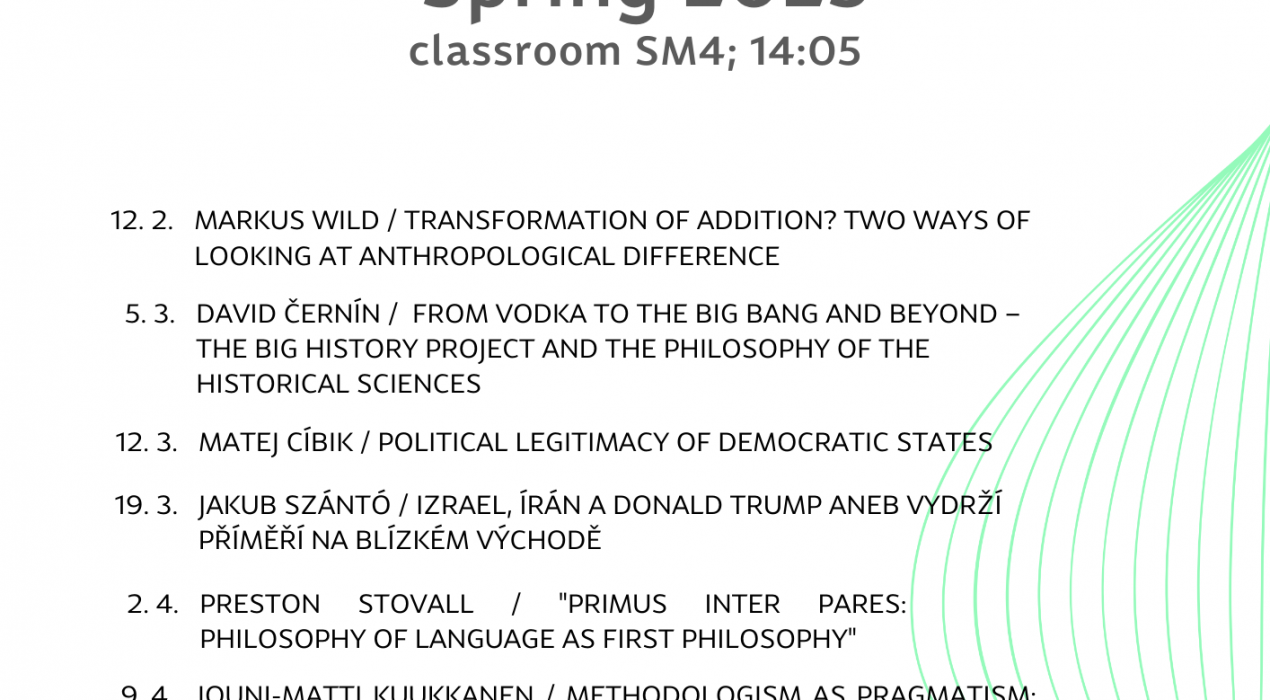
Anežka Kuzmičová: Why children undervalue their informational reading and why it matters
Anežka Kuzmičová (Univerzita Karlova) Why children undervalue their informational reading and why it matters ABSTRAKT: Most of the text we encounter in everyday life is nonfiction rather than fiction. Yet while fiction reading is widely researched and promoted for its whole-person benefits, informational reading continues to be understood as utilitarian and devoid of affect. To address this imbalance, my research team and I have conducted a holistic child-centred interview study (N = 20, ages 9-11) inviting children’s own reflection on nonfiction-related experience. Children first reflected on their real-world interests and on the various activities through which they nurture them. Then the interviews zoomed in on reading and nonfiction text design. In the children’s reflections, we found a strong pattern of undervaluing or not noticing one’s informational reading, due to two sets of constraints: (a) conceptual constraints, i.e., discursive biases about reading, and (b) phenomenal constraints, i.e., inherent characteristics that may indeed make informational reading inherently less amenable to reflection than fiction reading. I will detail these constraints and discuss their ramifications for education more generally.
Read More ›
Jouni-Matti Kuukkanen: Methodologism as Pragmatism: What Getting it Right Means?
Jouni-Matti Kuukkanen (University of Oulu) Methodologism as Pragmatism: What Getting it Right Means? ABSTRAKT: In my forthcoming book, Doing, Knowing, and Getting it Right: Methodologism as Pragmatism (Cambridge University Press), I call my approach to knowing and meaning ‚methodologism.‘ Building on the influential philosophies of Wilfrid Sellars, Robert Brandom, Jaroslav Peregrin, and Huw Price, this book introduces a novel neo-pragmatist philosophy. In this talk, I will explain how my approach differs from these and what methodologism means. Firstly, methodologism is resolutely anti-representationalist in both epistemology and the philosophy of language. A key idea is that knowing can, in general, be defined as a correct way of doing. This view applies to both the sciences and more mundane ways of knowing in our various forms of life. Colloquially speaking, ‚methods‘ are correct rule-bound ways of doing things. Another key idea is the classical pragmatist view that our most fundamental aim in epistemological approaches is to settle our beliefs. In the absence of a settlement (or the possibility of achieving a settlement in practice), the secondary aim is to guide our conversational practice. These are two general goals for our ‚methods.‘ Further, while the methodologist framework and a path to […]
Read More ›

Preston Stovall: Primus Inter Pares: Philosophy of Language as First Philosophy
Preston Stovall (Univerzita Hradec Králové) Primus Inter Pares: Philosophy of Language as First Philosophy ABSTRAKT: It is an open question whether and in what sense non-linguistic animals are capable of cognitive acts that have logical content, and of how explicitly codified deduction systems like those of classical logic might relate to whatever sort of cognition non-human animals are capable of. In this essay, I draw on two-factor approaches to human cognition, as well as a joint model-theoretic and proof-theoretic semantics for natural language, to show that a practical capacity for accepting and rejecting cognitive acts accounts for cognition as having a deductive logical structure but not content. On this basis, I hypothesize that the ability to engage in such self-directed cognitive acts is an evolutionary bridge linking simpler non-human and linguistic human cognition. Relating the proposal to bilateral proof systems, I show that a unilateral account of deductive inference specified in terms of assertion alone, where logical operations are accounted for in terms of content rather than structure, would be more parsimonious in communicating over and propagating the rules of such systems. This provides a plausible explanation for why logical instruction would occur in a unilateral assertion-based rather than a bilateral framework today even if, […]
Read More ›
Jakub Szántó: Izrael, Írán a Donald Trump aneb vydrží příměří na Blízkém východě?
Jakub Szántó (Česká televize) Izrael, Írán a Donald Trump aneb vydrží příměří na Blízkém východě? ABSTRAKT: 19. ledna 2025 začalo platit příměří mezi Izraelem a gazánskými teroristy. Současně platí podobné příměří mezi libanonským Hizballáhem a Izraelem z 27. listopadu 2024. Vydrží klid zbraní? Podaří se Íránu opět vybudovat protiizraelskou internacionálu na základu tzv. Osy odporu? Jaká bude politika Donalda Trumpa? A blíží se druhé kolo Abrahámovských dohod mezi arabskými zeměmi a židovským státem? Na komplikované otázky se pokusí nabídnout odpovědi televizní reportér ČT a spisovatel Jakub Szántó.
Read More ›
Matej Cíbik: Political Legitimacy of Democratic States
Matej Cíbik (Univerzita Pardubice) Political Legitimacy of Democratic States ABSTRAKT: Typically, democratic conceptions of political legitimacy (e. g. Buchanan 2002; Christiano 2004; Estlund 2009) stipulate that a functioning system of free and fair elections is necessary and sufficient for establishing a legitimate government. I disagree: free and fair electoral regime is only the first step toward democratic legitimacy. Equally important is the second step: the acceptance of the given electoral system by the population. My main ambition is to re-interpret the ideal of popular sovereignty as the basis of political legitimacy. I argue that this ideal can never be fully realized solely by organizing elections. A degree of continuous, informal acceptance of the political system (including the acceptance of the specific electoral system chosen by the given country) is also indispensable.
Read More ›

David Černín: From Vodka to the Big Bang and Beyond – the Big History Project and the Philosophy of the Historical Sciences
David Černín (Ostravská univerzita) From Vodka to the Big Bang and Beyond – the Big History Project and the Philosophy of the Historical Sciences ABSTRACT: Scientists in various fields (from cosmology, geology, and palaeontology to archaeology and historiography) are adept at inferring knowledge of the past and presenting it via distinct theories, models, and narratives. Although “the past” serves as a common denominator of these disciplines, philosophers tend to draw the lines along institutionalised groups, such as natural sciences, social science, and humanities. Consequently, the epistemic status of the past across scientific disciplines ranges from “set-in-stone” realism to nearly fictionised narrative accounts. However, history is not what it used to be, and both practitioners and philosophers are exploring new ways how to engage with the past. On the one hand, we have the Big History project, initiated by David Christian, which influences even school history education and aims to tell a story from the Big Bang to the current era. On the other hand, we have philosophers like Aviezer Tucker, Carol Cleland, Adrian Currie, and Derek Turner, who argue for a broader conception of historical sciences, which includes all disciplines that deal with the past. The talk will […]
Read More ›

Markus Wild: Transformation of Addition? Two Ways of Looking at Anthropological Difference
Markus Wild (University of Basel) Transformation of Addition? Two Ways of Looking at Anthropological Difference ABSTRAKT: Anthropological difference is the fundamental mental difference between humans and animals. A classic example of the anthropological difference is the definition of human beings as rational beings (animal rational). However, there are two different ways of understanding anthropological difference. According to the additive interpretation, the differential trait (e.g. reason) is added to the other cognitive capacities (e.g. perception) and contrive abilities (e.g. desire); according to the transformative interpretation, the differential characteristic changes these capacities and abilities in a profound way. The transformative view is mainly advocated by (broadly speaking) neo-Aristotelian thinkers. In my presentation, I will critically examine the transformative view.
Read More ›

Benjamin Purzycki: Ethnographic Free-Listing: Measuring and Incorporating Culture in the Social Sciences
Benjamin Purzycki (Aarhus University) Ethnographic Free-Listing: Measuring and Incorporating Culture in the Social Sciences ONLINE TALK! Odkaz na Zoom: https://cesnet.zoom.us/j/96542689460 ABSTRAKT: “Culture” has long been considered a major characteristic of and causal factor in human behavior and its variation. Yet, while some of the properties of distinctly human culture are assessed in empirical research projects, these properties are rarely linked to psychological and social contexts in meaningful ways. The free-list task captures important elements of what people know, believe, and what they communicate to each other. It also accounts for the distribution of cultural information and can be useful in assessing how culture affects human decisions and behavior. This talk profiles the method of ethnographic free-listing, highlights its utility across analytical levels including cognition, behavior, communities, and cross-population dynamics, and points to some ideas about future developments in the technique.
Read More ›

Kristine Hill: Sun, Sea, and Cats: Transspecies Ethnography of a Cat Colony on the Costa del Sol
Kristine Hill (Univerzita Hradec Králové) Sun, Sea, and Cats: Transspecies Ethnography of a Cat Colony on the Costa del Sol ABSTRAKT: This lecture draws upon my ongoing multispecies ethnographic study of a colony of free-living (unowned) cats (Felis catus) inhabiting a popular vacation destination on the southern coast of Spain. Tourism along the Costa del Sol is built around the classic ‘sun and sea’ style budget holidays, and a large community of British migrants reside seasonally or permanently in the region. Situated at the intersection of tourism, migration, and human-animal studies, my research explores the relationships and cultural interactions between local street cats and human residents and tourists. I build upon the concepts of transnational community-building, residential tourism, and more-than-human cultural co-creation by focusing on how British expatriates, tourism-based business owners, and visitors engage with and relate to local cats. By recognizing cats as sentient beings with subjective minds, my project seeks insight into the feline perspective and an understanding of how they assert agency and influence human attitudes and behaviors. Adopting the concept of humano-cat cultures, which recognizes how different groups of cats develop distinct cultures and unique relationships with different human groups (colony caretakers, residents, and restaurant […]
Read More ›