Jaroslav Malík: (Dis)continuity of Artificial Reason
Jaroslav Malík (University of Hradec Králové) (Dis)continuity of Artificial Reason ABSTRACT: AI safety literature typically models superintelligent AI (from now on as SI) agents as both highly instrumentally rational (coherent in decision-theoretic terms) and generally intelligent (capable across diverse domains). Drawing on theories of bounded rationality, this presentation puts forward that these two properties may be fundamentally at odds. There is an often cited counterexample to decision theory: the inverse relationship between cognitive complexity and rational coherence. Empirical studies present a trend where less complex animals generally demonstrate greater coherence than humans in decision-theoretic tests. However, the picture of SI, presents an idea of anomalous agents that are both highly complex and highly coherent. I connect general inteligence with complexity and argue that greater degrees of general inteligence are likely to produce incoherence in rational agents. My argument is that there is a “Valley of Incoherence” between known biological agents and hypothetical SI systems that makes existance of SI agent (at least as presented in AI safety) improbable. While AI safety theorists might appeal to evolutionary bottlenecks or collective rationality as counterarguments, current AI development mirrors this trend: narrow RL agents show high coherence while general-purpose LLMs exhibit […]
Read More ›

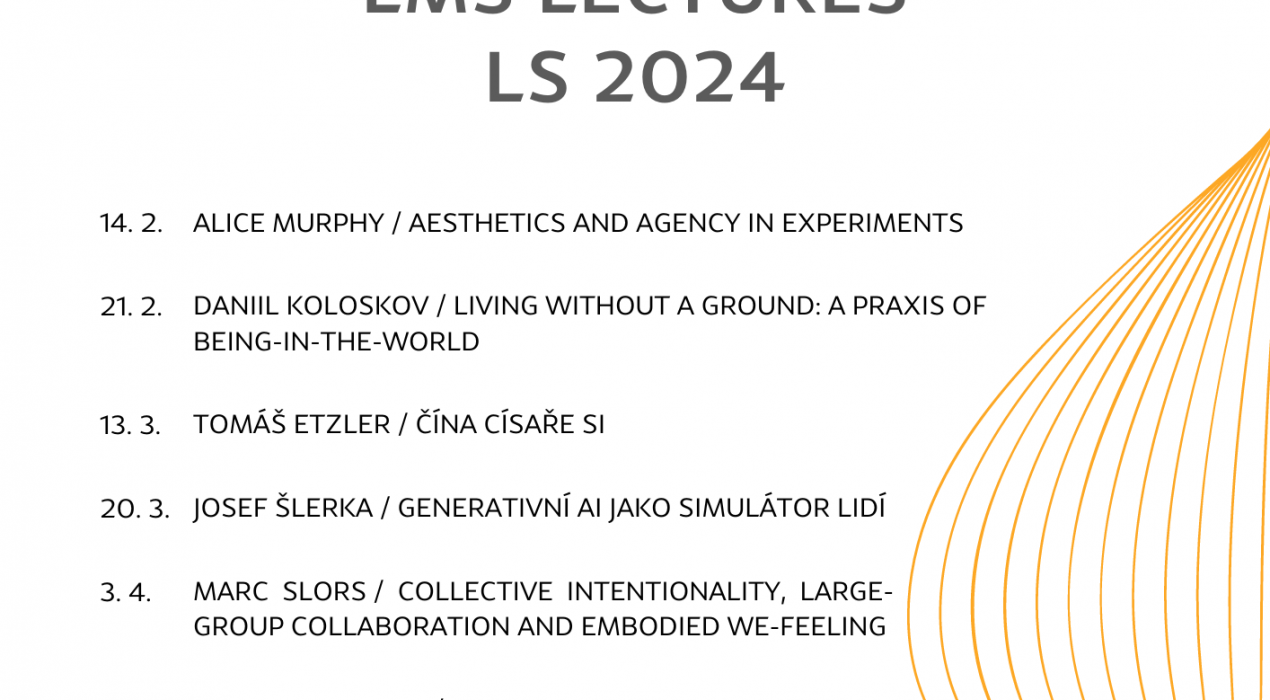
Daniil Koloskov: Living Without a Ground: A Praxis of Being-in-the-World
Daniil Koloskov (Univerzita Hradec Králové) Living Without a Ground: A Praxis of Being-in-the-World ABSTRACT: In my talk, I will seek to demonstrate that existential phenomenology and, speaking more specifically, Heidegger’s work carries with itself a promise of alternative account of pragmatism, which might be described as phenomenological pragmatism or Heideggerian pragmatism. The central aspect of Heideggerian approach is an attempt to fully account for the ontological dimension of practices, their ability to disclose what entities are and who Dasein is; phenomenological pragmatism holds that disclosure of being (which is interpreted as disclosure of meaning (see Dreyfus, 1991; Sheehan, 2014; Schürmann 1987)) happens on the level of everyday practices. In order to explicate this point, I will offer a genetic reformulation of Heidegger’s central notions of disclosure, Dasein and average intelligibility (Das Man) in terms of praxis. Investigating the dynamic interrelation among those notions, I will offer a phenomenological conception of forms of life or average background practices; form of life is not a pragmatic condition of meaningfulness but an outcome of the dynamic process of meaning-formation, which is itself essentially practical. Proceeding this way, I will argue that the formation of meaning has no overarching origin or ground […]
Read More ›
Jaroslav Peregrin: Normative Species: How Naturalized Inferentialism Explains Us
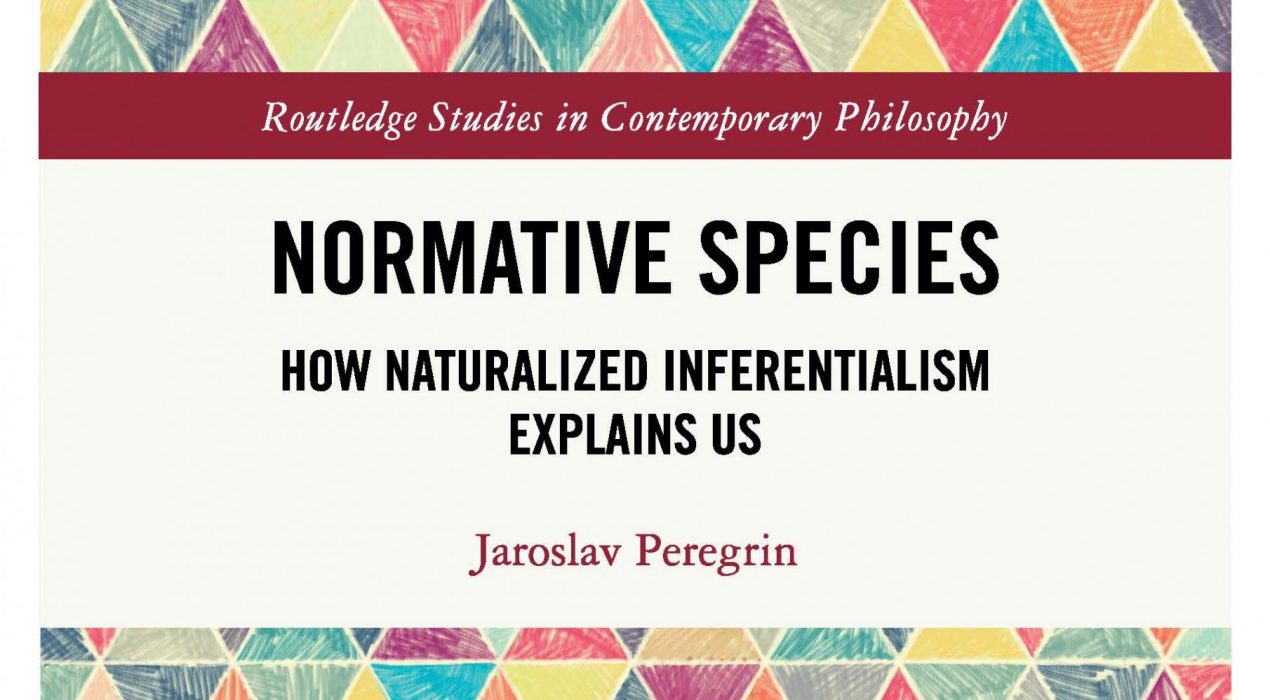
Jaroslav Peregrin (Univerzita Hradec Králové) will present his new book Normative Species: How Naturalized Inferentialism Explains Us https://www.taylorfrancis.com/books/mono/10.4324/9781003388876/normative-species-jaroslav-peregrin which has resulted from the project Inferentialism naturalized: norms, meanings and reasons in the natural world. ABSTRACT: The book is about rules, and especially about human capability to create, maintain and follow rules, as a root of what makes us humans different from other animals. The leading idea is that scrutinizing this capability is able to tell us who we humans are and what kinds of lives we live. It elaborates Wilfrid Sellars’ visionary observation that “to say that man is a rational animal, is to say that man is a creature not of habits, but of rules”; and it builds on the ideas of Sellars’ and Brandom’s inferentialism, in a novel naturalistic way. The main tenet of inferentialism is that our language games are essentially rule-governed and that meanings are inferential roles. Jaroslav Peregrin sees the task of reconciliation of inferentialism and naturalism as centered around the problem of naturalization of rules. He argues that the most primitive form of a rule is a cluster of normative attitudes. We humans are specific by our tendency to assume peculiar […]
Read More ›

Matěj Pudil: Human in Relation to the World: The Umwelt-Welt Transition
Matěj Pudil (Univerzita Hradec Králové) Human in Relation to the World: The Umwelt-Welt Transition The talk will be in the Czech language. ABSTRACT in Czech: Ve fenomenologické a filosoficko-antropologické tradici (tam, kde jsou ovlivněny prací Jakoba von Uexkülla) se můžeme setkat s tvrzením, že jedním z fundamentálních rozdílů mezi člověkem a zvířaty je ten, že zatímco zvíře prodlévá ve svém druhově specifickém umweltu (žitém světě / osvětí), lidé mají přístup k (jisté představě) weltu (tj. světa). I v současnosti se do popředí zájmu výzkumníků na poli “umweltových studií” vrací Heideggerova teze o zvířeti chudém světem, kontrastovaném s člověkem “světatvůrcem”. Problém ovšem je, jak vyjádřit status tohoto weltu / světa. Ve svém příspěvku budu právě kolem tohoto problému kroužit. Opřu se přitom mj. o svůj předchozí projekt zaměřený na komunikaci u hluchoslepých osob, který dle mého soudu může poodkrýt způsob, jak se lidský umwelt v průběhu života vyvíjí a transformuje a jak v něm vystupuje onen “svět”. Nekladu si přitom nárok na jednoznačné uzavření naznačených otázek, jedná se totiž stále o work in progress.
Read More ›

Iva Svačinová: The Nature of Argumentation in Personal Diaries
Iva Svačinová (KFSV FF UHK) The Nature of Argumentation in Personal Diaries ABSTRACT IN CZECH: V příspěvku se zaměřím na charakter argumentace v tzv. vnitřních dialozích, které lidé vedou sami se sebou ve své mysli. Vycházím z předpokladu, že osobní deníky mohou být pojaty jako přirozený způsob externalizace vnitřních dialogů a mohou nám sloužit jako data pro výzkum jejich charakteru. Pokusím se ukázat, že skrze psaní deníků mohou být realizovány různé varianty sebe-přesvědčování. Konkrétně se zaměřím na tři způsoby persuasivní vnitřní komunikace, které bývají skrze psaní deníku externalizovány: “reflektivní” psaní deníku umožňující prozkoumání nesrozumitelné životní zkušenosti, “krizové” psaní deníku umožňující dosáhnout rozhodnutí v kontextu epistemické nejistoty a “povzbuzující” psaní deníku sloužící k vyburcování sebe sama k provedení nějaké náročné akce. Tyto persuasivní praxe se vyskytují s ohledem na specifický kontext, a vzhledem ke konkrétním cílům se liší svým průběhem a typem argumentace, který v nich může být využit. Pro argumentační charakterizaci těchto praxí využiji koncept typu komunikační aktivity, který byl zaveden v rámci pragma-dialektického přístupu k argumentaci. Ilustrace jednotlivých typů komunikačních praxí čerpám z deníků získaných v rámci svého výzkumu.
Read More ›