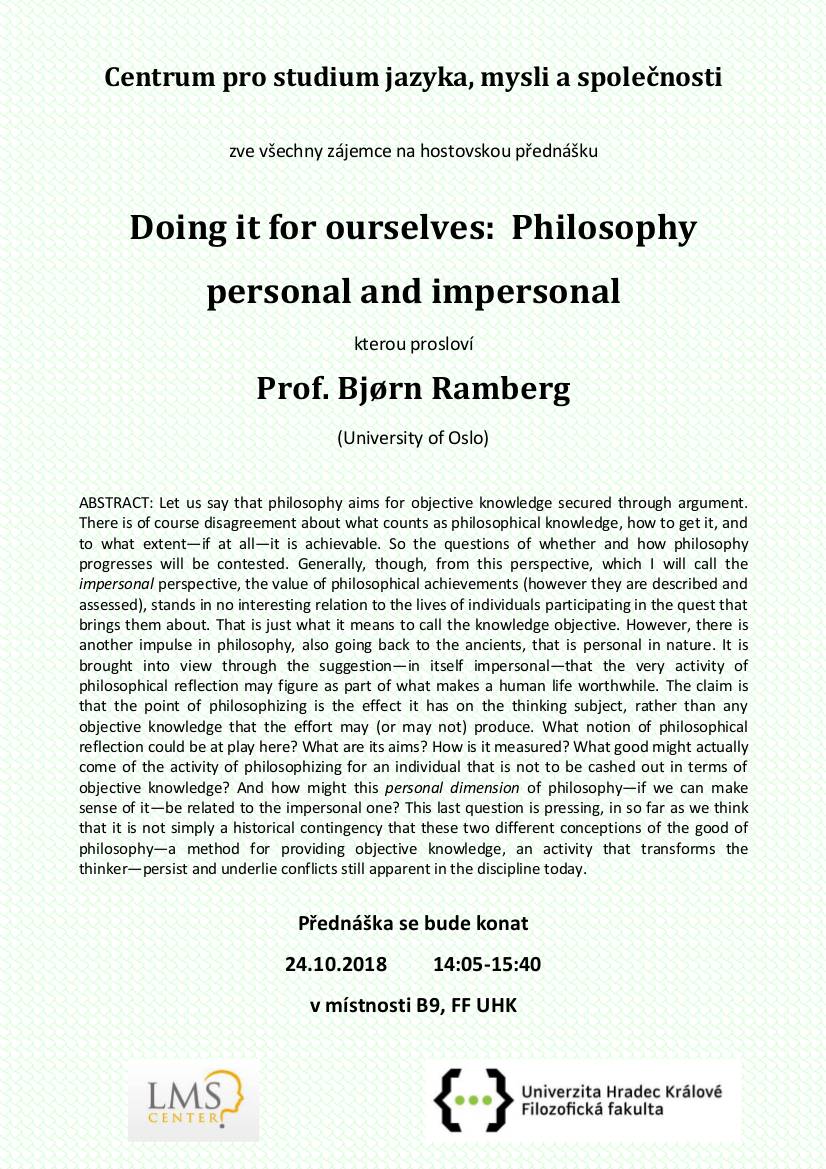
Centrum pro studium jazyka, mysli a společnosti zve všechny zájemce na přednášku „Doing it for ourselves: Philosophy personal and impersonal“ kterou prosloví prof. Bjørn Ramberg (University of Oslo).
Přednáška se uskuteční dne 24. 10. 2018 na filozofické fakultě UHK v místnosti B9 od 14:05 do 15:40.
ABSTRACT: Let us say that philosophy aims for objective knowledge secured through argument. There is of course disagreement about what counts as philosophical knowledge, how to get it, and to what extent—if at all—it is achievable. So the questions of whether and how philosophy progresses will be contested. Generally, though, from this perspective, which I will call the impersonal perspective, the value of philosophical achievements (however they are described and assessed), stands in no interesting relation to the lives of individuals participating in the quest that brings them about. That is just what it means to call the knowledge objective. However, there is another impulse in philosophy, also going back to the ancients, that is personal in nature. It is brought into view through the suggestion—in itself impersonal—that the very activity of philosophical reflection may figure as part of what makes a human life worthwhile. The claim is that the point of philosophizing is the effect it has on the thinking subject, rather than any objective knowledge that the effort may (or may not) produce. What notion of philosophical reflection could be at play here? What are its aims? How is it measured? What good might actually come of the activity of philosophizing for an individual that is not to be cashed out in terms of objective knowledge? And how might this personal dimension of philosophy—if we can make sense of it—be related to the impersonal one? This last question is pressing, in so far as we think that it is not simply a historical contingency that these two different conceptions of the good of philosophy—a method for providing objective knowledge, an activity that transforms the thinker—persist and underlie conflicts still apparent in the discipline today.